
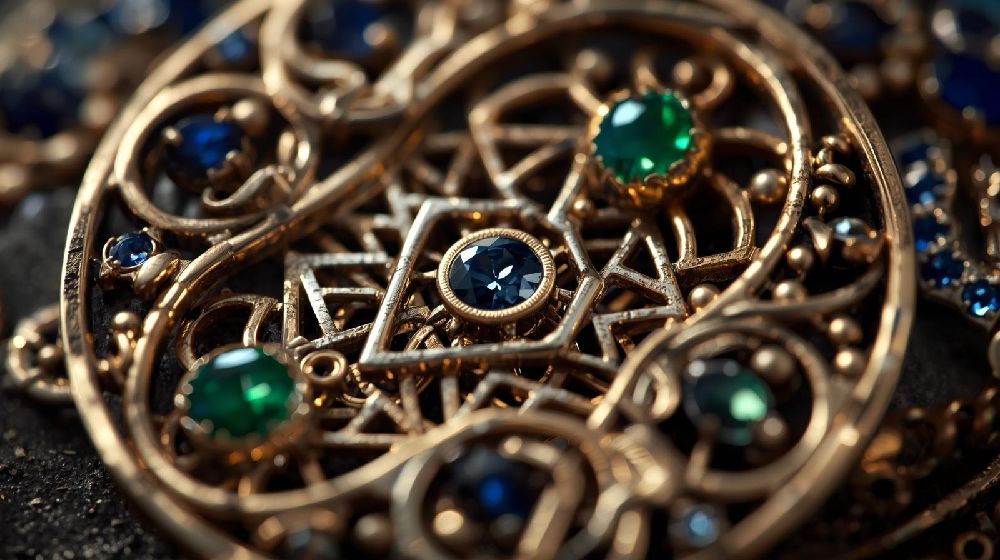
Jewelry has always been more than ornamentation. Long before written language, humans used shapes, symbols, and patterns to communicate beliefs, emotions, and identity. Even today, every curve, line, and motif in jewelry carries meaning—quietly speaking a language understood through design.
The hidden language of shapes and patterns transforms jewelry from decoration into storytelling.
Why Shapes and Patterns Matter in Jewelry Design
Shapes and patterns influence how a piece feels, not just how it looks. They evoke emotions, symbolize values, and create a subconscious connection between the wearer and the design.
Design elements help convey:
Strength, harmony, or protection
Love, continuity, or transformation
Cultural heritage and personal beliefs
Jewelry becomes meaningful when form and symbolism align.
The Symbolism of Common Jewelry Shapes
Each shape carries a distinct message:
Circles
Symbolize eternity, unity, and wholeness. Circular designs in rings, bangles, and pendants represent continuity and unbroken bonds.
Squares and Rectangles
Represent stability, balance, and structure. These shapes convey strength and reliability, often used in modern or architectural designs.
Triangles
Symbolize power, direction, and transformation. Depending on orientation, triangles can reflect growth, protection, or dynamic energy.
Hearts
Universally associated with love and emotion, heart shapes communicate affection, care, and emotional connection.
Ovals and Organic Forms
Suggest femininity, fluidity, and natural beauty. These shapes feel soft, graceful, and timeless.
Patterns as Visual Storytellers
Patterns add rhythm and depth to jewelry. Repetition, symmetry, and flow guide the eye and enhance emotional impact.
Common pattern meanings include:
Geometric patterns: Order, precision, modernity
Floral motifs: Growth, renewal, and femininity
Waves and curves: Movement, freedom, and calm
Interlocking patterns: Unity, connection, and infinity
Patterns often reflect cultural influences, historical references, or philosophical ideas.
Cultural Influence on Jewelry Shapes and Motifs
Across civilizations, jewelry patterns have carried cultural meaning. Traditional motifs often symbolize protection, prosperity, or spirituality.
For example:
Mandala-inspired designs represent harmony and balance
Repetitive patterns reflect continuity and heritage
Symmetry signifies order and perfection
Understanding cultural symbolism adds depth to jewelry design and appreciation.
Emotional Impact on the Wearer
The shapes and patterns a person chooses often reflect their inner identity. Minimal lines may express clarity and confidence, while intricate motifs suggest creativity and depth.
Jewelry becomes a form of silent communication—expressing mood, values, and personal style without words.
Modern Interpretation of Symbolic Design
Contemporary jewelry design blends traditional symbolism with modern aesthetics. Clean lines paired with meaningful shapes allow wearers to carry symbolism subtly, without overt decoration.
This balance makes symbolic jewelry suitable for everyday wear while retaining emotional depth.
Craftsmanship Brings Meaning to Life
Precision crafting ensures that shapes and patterns remain sharp, balanced, and intentional. Fine detailing enhances symbolism, ensuring the design speaks clearly and elegantly.
When craftsmanship respects the language of design, jewelry becomes timeless.
Conclusion: Jewelry That Speaks Without Words
The hidden language of shapes and patterns gives jewelry its soul. Every curve, angle, and motif carries meaning—telling stories of love, strength, heritage, and identity.
When you wear jewelry, you don’t just wear metal and design—you wear a message.