

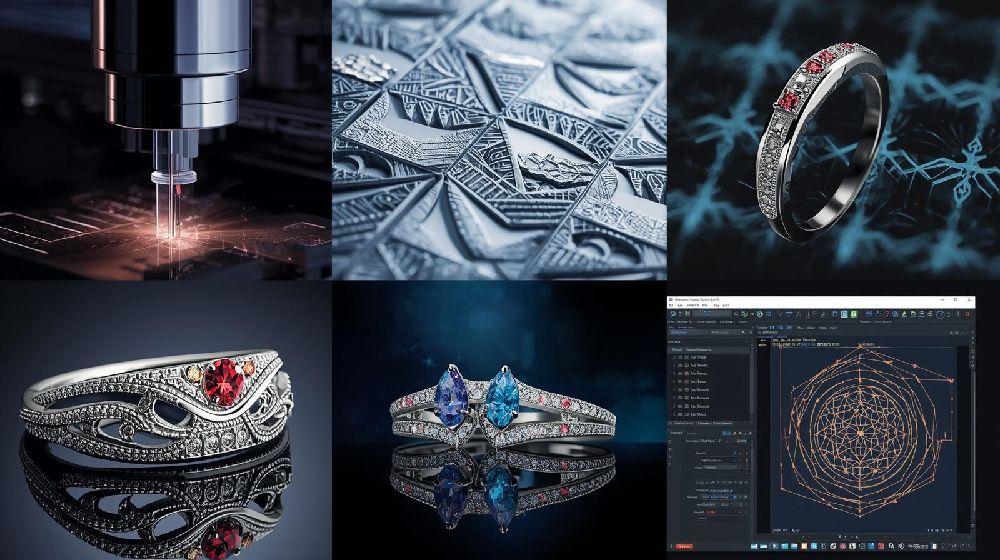
Jewelry has always been a fusion of art and craftsmanship. Traditionally, skilled artisans shaped metals, set stones, and polished surfaces by hand, combining creativity with painstaking precision. Today, technology is transforming the jewelry industry, creating new possibilities in design, production, and quality control—without compromising the artistry that defines fine jewelry.
Digital Design: From Sketch to Screen
The first major shift in jewelry design is the use of Computer-Aided Design (CAD). CAD allows designers to create intricate 3D models on a computer before a piece is ever physically crafted. With CAD:
Designs can be visualized from all angles
Modifications can be made instantly
Complex patterns, textures, and structures become achievable
This digital precision reduces material waste and accelerates the journey from concept to prototype.
CNC and Laser Technology: Precision Meets Craftsmanship
Once designs are digitized, CNC (Computer Numerical Control) machines and laser technology bring them to life with incredible accuracy. These tools allow:
Micron-level precision in cutting and shaping metals
Seamless joints through laser welding
Intricate details that were previously impossible to achieve by hand
Advanced machinery ensures that each piece maintains both structural integrity and visual perfection.
3D Printing: Rapid Prototyping and Innovation
3D printing has revolutionized jewelry prototyping. Designers can quickly print wax or resin models to:
Test fit and comfort
Refine design elements
Showcase prototypes to clients before production
This speed and flexibility encourage experimentation and creativity without the high cost of traditional trial-and-error methods.
Smart Materials and Innovative Alloys
Technology has also enabled the development of new alloys and composite materials that improve durability, reduce weight, and maintain shine. From gold alloys engineered for strength to sustainable metals for eco-conscious consumers, material science is now an integral part of jewelry innovation.
Quality Control in the Digital Age
Digital tools and sensors allow manufacturers to monitor every step of production. Jewelry can now undergo:
Automated measurements for thickness and weight
Surface analysis to ensure flawless finishes
Structural integrity checks
The result is consistent high-quality jewelry, even in large-scale production.
Sustainability Through Precision
Technology also supports sustainability in jewelry manufacturing. By reducing waste, optimizing material usage, and improving production efficiency, brands can create luxury pieces that are environmentally responsible.
Bridging Art and Technology
While machines and software enhance precision, the human touch remains essential. Skilled artisans continue to polish, set stones, and apply finishing touches, blending creativity with digital perfection. Technology does not replace craftsmanship—it elevates it, making designs more intricate, durable, and innovative.
The Future of Jewelry Manufacturing
As technology continues to evolve, we can expect:
Lighter and stronger designs
Greater customization and personalization
Smarter, data-driven production processes
Integration of AI and digital marketing to anticipate consumer trends
The combination of tradition and innovation ensures jewelry remains both timeless and forward-looking.
Final Thoughts
Technology is transforming jewelry from a purely handcrafted art into a precision-driven craft that retains beauty while embracing efficiency and innovation. By leveraging CAD, CNC, laser welding, 3D printing, and advanced materials, the industry is pushing the boundaries of design, production, and sustainability.
In the modern era, jewelry is not just worn—it is engineered, designed, and crafted with technological mastery.